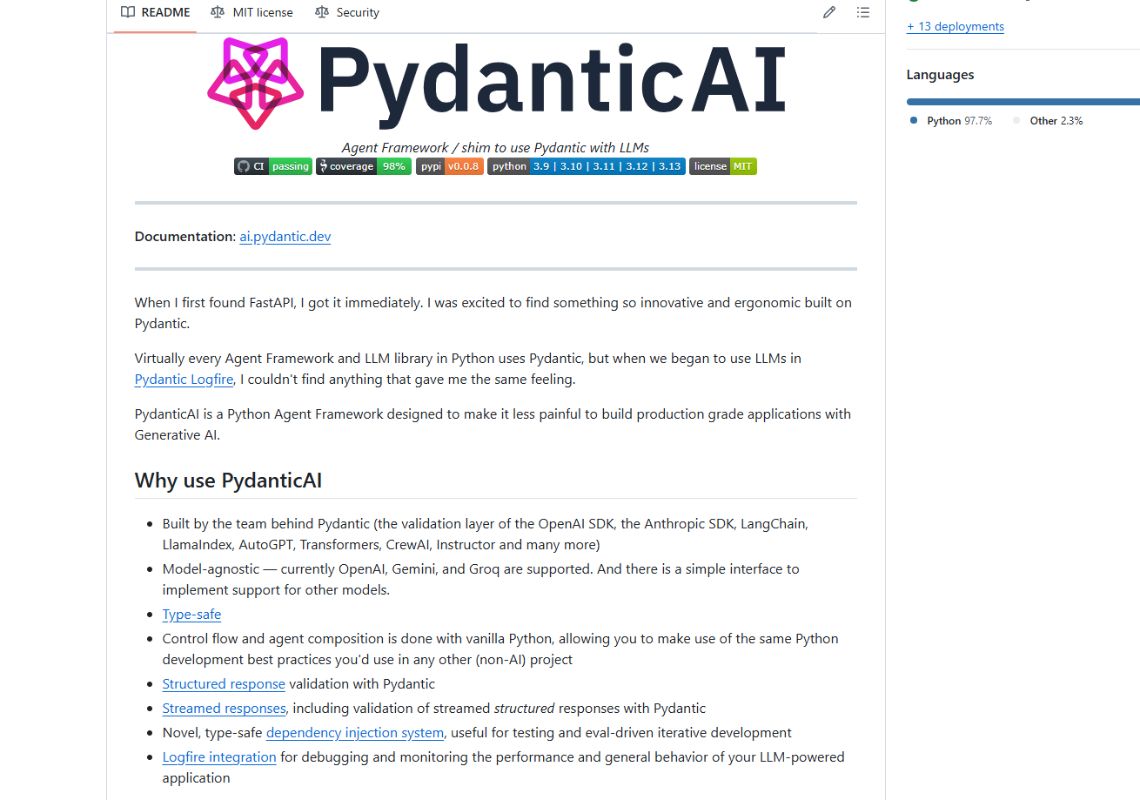
PydanticAI Reviews
(Rated by 13 users)
Are you looking for ways to save money when shopping at PydanticAI. Our PydanticAI coupon codes can help you do just that! Over 13 customers have already used our coupons to save an average of $60 with PydanticAI discount codes. There are currently 6 coupons available, so now is the perfect time to join in on the savings.
Are you looking for ways to save money when shopping at PydanticAI. Our PydanticAI coupon codes can help you do just that! Over 13 customers have already used our coupons to save an average of $60 with PydanticAI discount codes. There are currently 6 coupons available, so now is the perfect time to join in on the savings.
Payment Methods
- Verified Store VERIFIED
- Free shipping: Orders $50+
- In-store pickup: Ready in 2 hours
- 30-Day Returns
- Gap Good Rewards (4 brands)
Payment Methods
- Tops: $23 - $70
- Bottoms: $27 - $70
- Outerwear: $34 - $70
- Kids: $29 - $75
Overall Rating
4.4
Base on 13 Reviews
Ratings by Feature
Ratings by Feature
- Good Value4.4
- Customer Service4.7
- Price & Quality4.5
Recent Customer Reviews (13)
Stefanie Gruenewald
View replies
Archard Blanc
View replies
Þorgrímur Júlíusson
View replies
Frank Schröder
View replies
Sheboygan Rees
View replies
Sylvía Finnbogadóttir
View replies
Abdulla Vedzizhev
View replies
Tom Feierabend
View replies
Jose McFadden
View replies
Emmanuel Dastous
View replies
PydanticAI Pros & Cons
Pros
1
Ease of Use: Creating an AI agent is straightforward, requiring minimal code. It involves specifying the model name and a system prompt, making it accessible for new developers.
2
Vanilla Python: Built on standard Python, Pydantic AI provides full control and visibility into the code, facilitating customization and debugging.
3
Dependency Injection: This feature allows for flexible and maintainable code, especially in larger projects.
4
Observability Integration: Offers integration with tools like Logfire for comprehensive tracing of prompts and costs.
5
Increased Productivity: Automates tasks such as input validation and error handling, allowing developers to focus on higher-level aspects of AI development.
6
Type Safety: Ensures interactions with AI models are validated against predefined schemas, reducing errors.
7
Model Agnostic: Supports switching between different AI model providers without rewriting application logic.
8
Robust Data Validation: Utilizes Pydantic's robust data validation capabilities to ensure data integrity.
9
Type Safety: Ensures that tools are called with the correct arguments and return the correct data types, enhancing reliability and reducing errors.
10
Structured Outputs: Provides more control over desired output formats, improving consistency and accuracy compared to traditional schema-based approaches.
11
Async Tool Calling: Supports asynchronous tool calls, allowing for more efficient workflow execution.
12
Streaming Responses: Enables streaming of structured responses, which can be beneficial for real-time data processing and UI updates.
13
Multi-LLM Support: Compatible with multiple LLM providers, offering flexibility in model selection.
CONS
1
Complexity in Tool Calls: The framework may prompt the LLM repeatedly until it receives a string response, which can be inefficient and annoying.
2
Potential for Inconsistent Behavior: The need for manual intervention or workarounds in certain scenarios can compromise type safety and consistency.
PydanticAI Features and Benefits
Features
Ease of Use
Creating an AI agent is straightforward, requiring minimal code. It involves specifying the model name and a system prompt, making it accessible for new developers.
Vanilla Python
Built on standard Python, Pydantic AI provides full control and visibility into the code, facilitating customization and debugging.
Dependency Injection
This feature allows for flexible and maintainable code, especially in larger projects.
Observability Integration
Offers integration with tools like Logfire for comprehensive tracing of prompts and costs.
Increased Productivity
Automates tasks such as input validation and error handling, allowing developers to focus on higher-level aspects of AI development.
Type Safety
Ensures interactions with AI models are validated against predefined schemas, reducing errors.
Model Agnostic
Supports switching between different AI model providers without rewriting application logic.
Robust Data Validation
Utilizes Pydantic's robust data validation capabilities to ensure data integrity.
Structured Outputs
Provides more control over desired output formats, improving consistency and accuracy compared to traditional schema-based approaches.
Async Tool Calling
Supports asynchronous tool calls, allowing for more efficient workflow execution.
Streaming Responses
Enables streaming of structured responses, which can be beneficial for real-time data processing and UI updates.
Multi-LLM Support
Compatible with multiple LLM providers, offering flexibility in model selection.